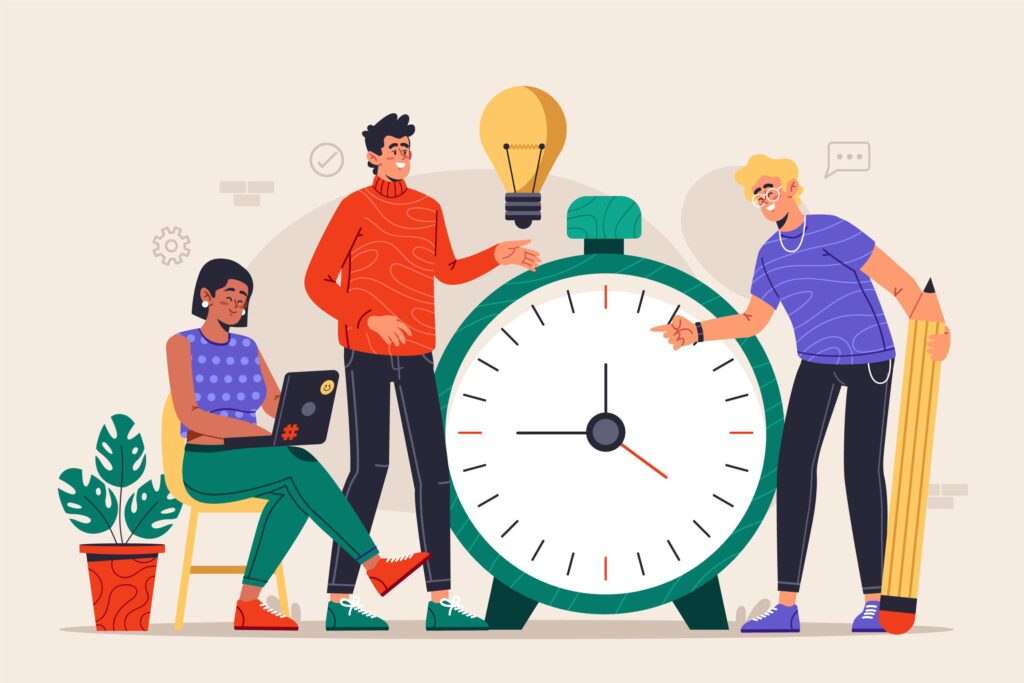
The way professionals work is changing faster than ever. Remote jobs, hybrid schedules, constant notifications, and rising expectations have reshaped how time is used at work. In 2026, success will not come from working longer hours. It will come from mastering the right Time Management Skills that help professionals stay focused, organized, and mentally balanced.
Being busy is no longer impressive. Being effective is. Professionals who learn to manage their time well will consistently outperform those who rely on motivation alone.
Why Time Management Matters More Than Ever
In earlier years, time management was often seen as a nice habit to have. Today, it is a survival skill. With endless meetings, messages, and shifting priorities, professionals lose hours each week to distractions.
Strong Time Management Skills help you regain control of your workday. They allow you to decide what deserves your attention instead of reacting to everything that demands it. This control directly impacts productivity, career growth, and even mental health.
In 2026, employers value professionals who can deliver results without burnout. Time management is at the center of that equation.
Focus Management Over Multitasking
Multitasking has long been praised, but research and real-world experience prove that it reduces quality and efficiency. In the modern workplace, focus is the real advantage.
One of the most valuable Time Management Skills professionals is learning how to work in focused blocks. Techniques like timeboxing help you dedicate uninterrupted time to one task before moving on to the next. This approach reduces mental fatigue and improves output.
When focus becomes a habit, even complex tasks feel manageable.
Prioritization That Matches Real Workdays
Not all tasks deserve equal attention. Professionals who struggle with time management often treat everything as urgent, which leads to stress and unfinished work.
Effective Time Management Skills include learning how to prioritize realistically. Methods like the Rule of Three help professionals choose only three meaningful priorities per day. This creates clarity and prevents overloading.
When priorities are clear, decision-making becomes faster and workdays feel lighter.
Task Breakdown for Consistent Progress
Large goals often create resistance because they feel overwhelmed. Writing a report, launching a campaign, or preparing a presentation can stall progress if viewed as one massive task.
Breaking work into smaller actions is one of the most practical Time Management Skills professionals can develop. Instead of focusing on the entire project, focus on the next small step. This builds momentum and reduces procrastination.
Progress feels achievable when tasks are clearly defined.
Managing Distractions in a Digital Workplace
Notifications are one of the biggest threats to productivity. Emails, chat apps, and alerts constantly interrupt focus and drain energy.
Professionals with strong Time Management Skills design their environment to protect attention. This includes scheduled email checks, muted notifications during deep work, and clear boundaries with colleagues.
Distraction management is no longer optional. It is essential for sustained performance.
Energy Management Alongside Time
Time alone is not enough. Energy determines how well that time is used. Professionals often try to force productivity when their energy is low, leading to poor results.
Modern Time Management Skills include understanding personal energy patterns. Some people work best in the morning, others later in the day. Planning demanding tasks during high-energy periods improves efficiency and reduces burnout.
When time and energy align, work becomes smoother and more satisfying.
Systems Over Motivation
Motivation is unreliable. Some days it shows up, some days it does not. Systems, on the other hand, create consistency.
The most effective Time Management Skills in 2026 are system-based. Daily planning routines, weekly reviews, and visual tools like Kanban boards help professionals track progress and stay organized without relying on willpower.
Systems remove guesswork and make productivity repeatable.
Preparing for the Future of Work
As automation and AI tools continue to evolve, professionals will be expected to manage more responsibilities with fewer resources. Those who master Time Management Skills will adapt faster and remain valuable in any role.
Time management is not about doing more. It is about doing what matters, with intention and clarity.
Final Thoughts
In 2026, professionals who thrive will not be the busiest ones. They will be the most intentional. Developing strong Time Management Skills allows you to protect focus, reduce stress, and consistently deliver meaningful results.
Time is limited. How you manage it will define your career.